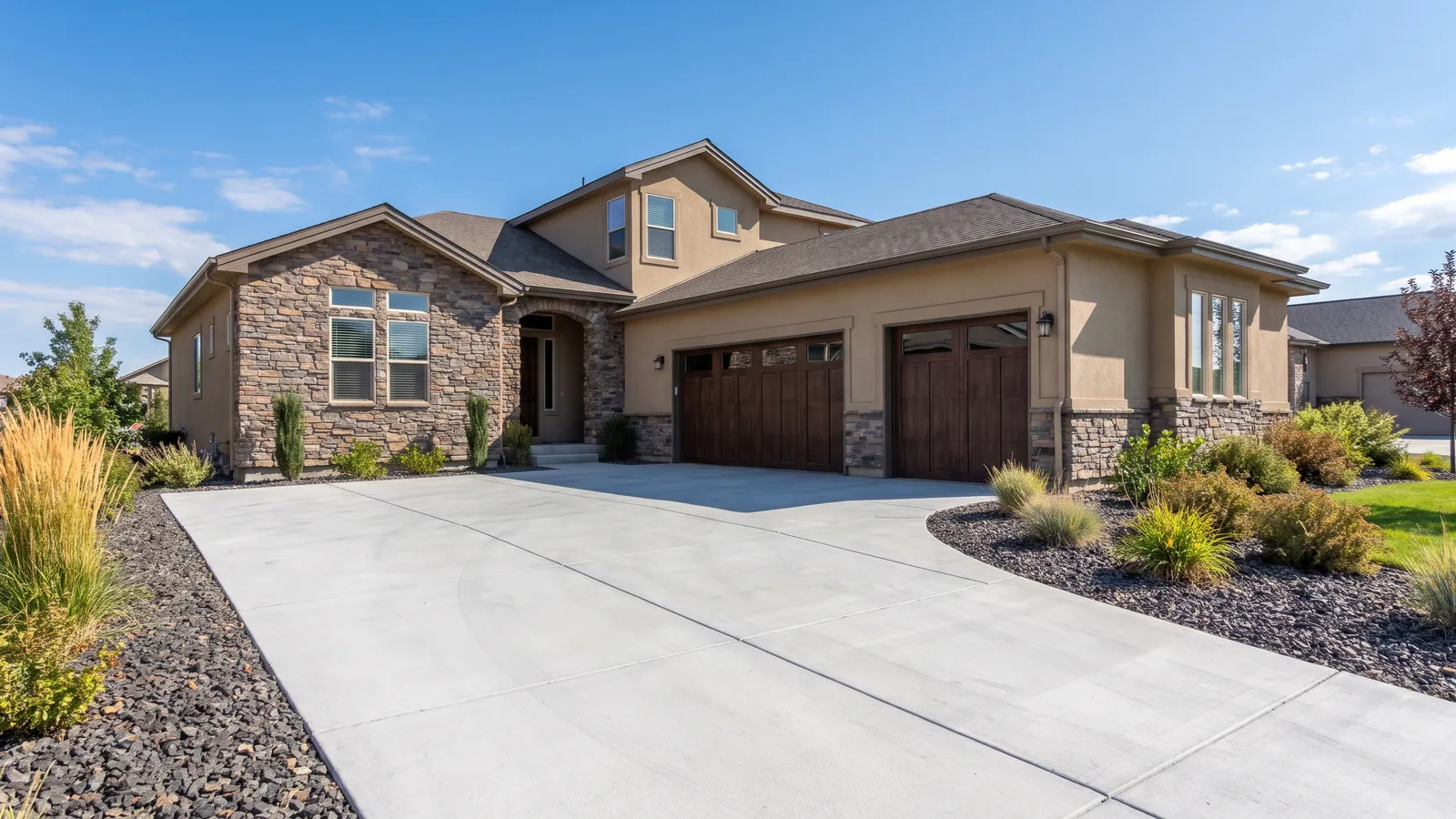
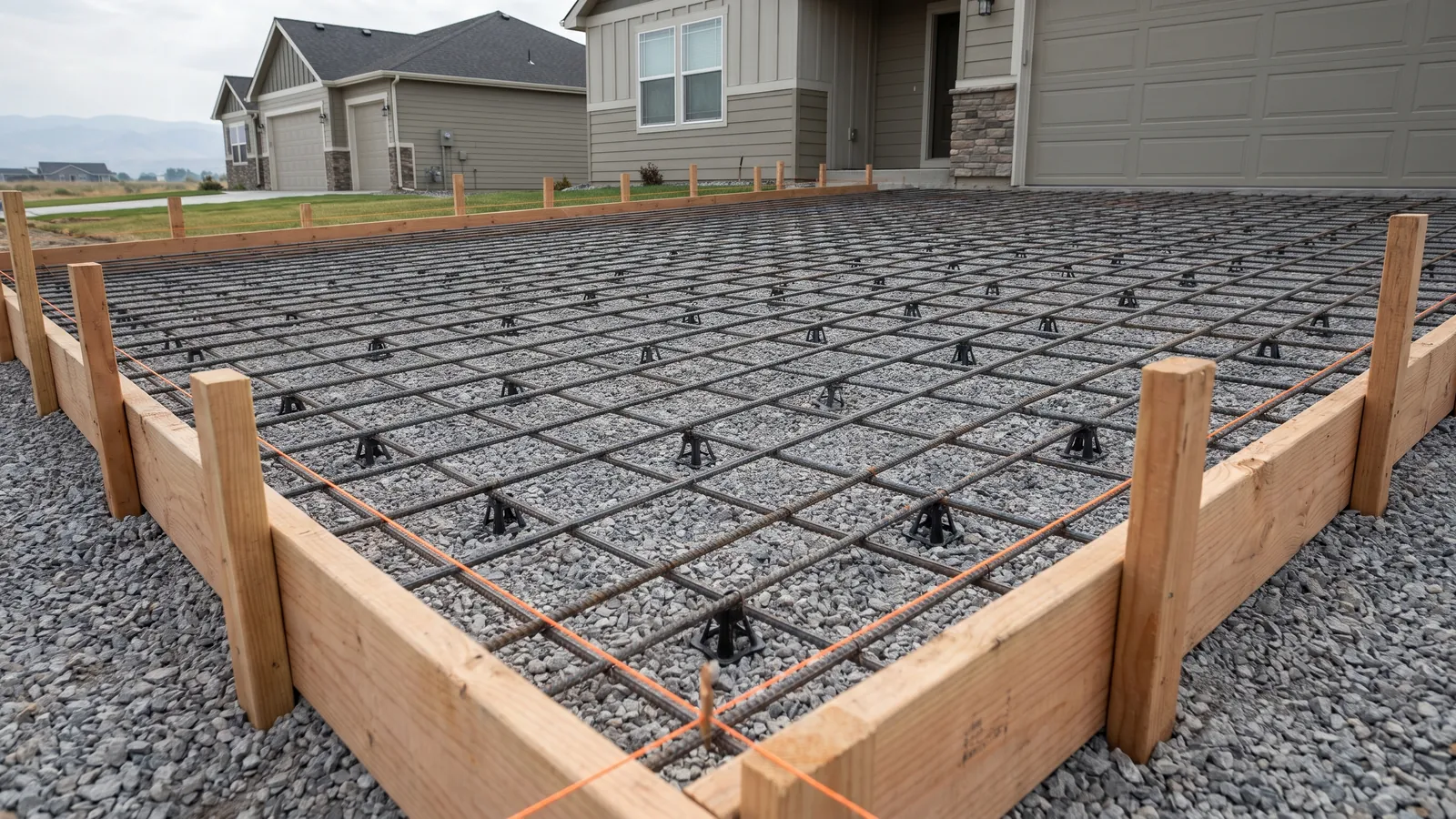
Our driveway specification starts below grade. Under the slab goes a minimum of four inches of compacted gravel, the floor Meridian's code sets for every driveway and parking surface in the street yard; where the test hole shows soft silt, or the old slab leaves a void, the base gets deeper. On top goes concrete ordered at about 4,000 psi with roughly 6 percent entrained air, which is the National Ready Mixed Concrete Association's recommendation for exterior flatwork that sees freezing and deicing salt. Slab thickness follows the load: four inches under passenger cars, five or six where a pickup, trailer or RV will sit, plus steel when the soil or the weight requires it.
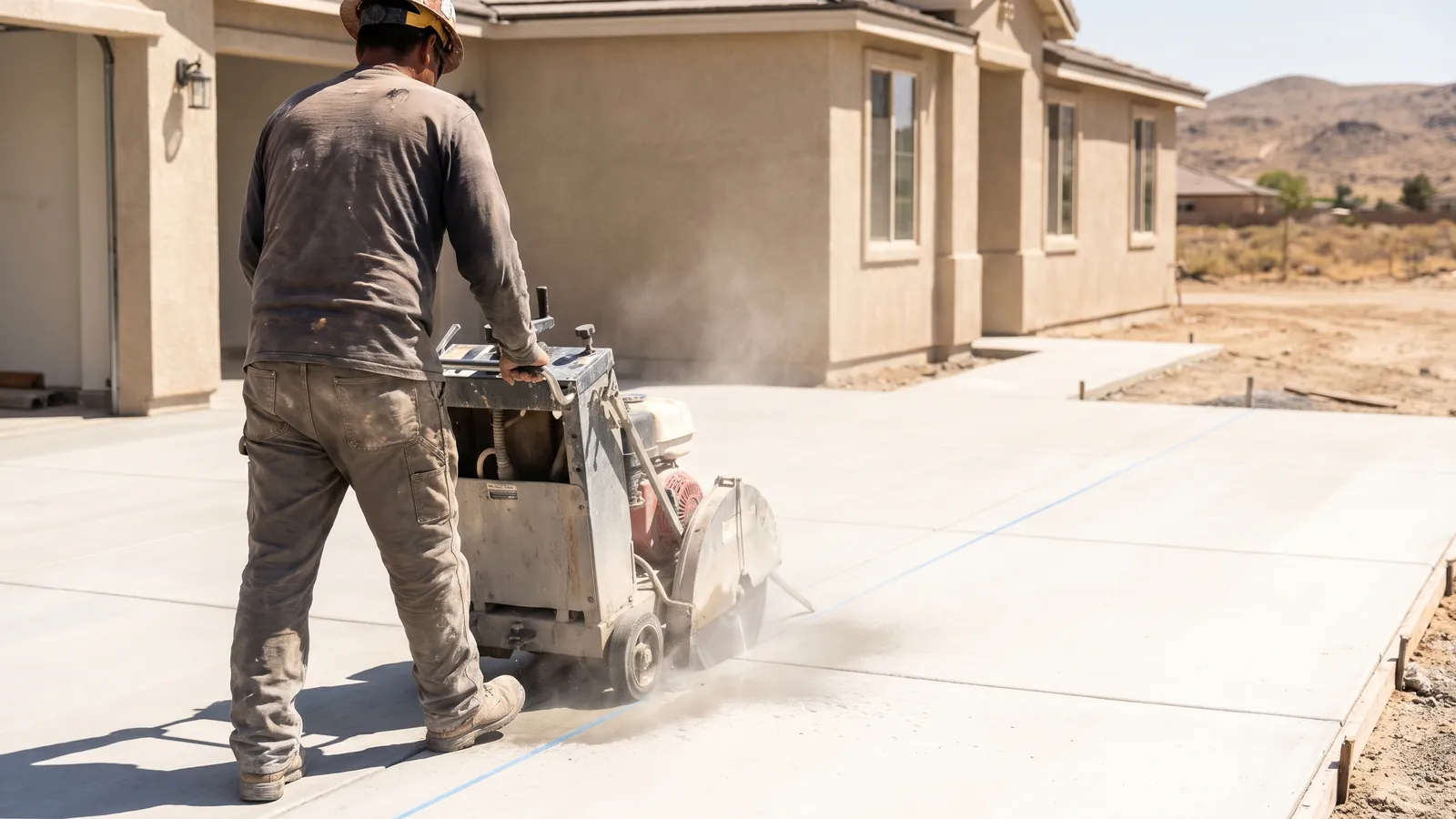
On the day it is placed, the slab gets control joints at about 10 to 12 feet, tighter on a narrow drive. Grading sends water off the slab and away from the foundation. A curing compound keeps the surface from drying out in a 95-degree August, and a breathable penetrating sealer goes on after cure. The written care sheet carries one rule we also repeat in person: nothing to melt ice during the first winter, and no magnesium chloride in any winter.
Most driveways we place are replacing one that failed early. In Meridian the cause is usually a combination of these:
- Climate. The Boise airport records an average of 108 nights a year at or below freezing, and on about 92 days the surface freezes overnight and thaws by afternoon. Water held in the surface expands with each freeze.
- Deicer. Before storms ACHD applies liquid magnesium chloride to the arterial roads; vehicles carry it home, and it drips at the garage and the approach. Ready-mix industry guidance is to keep magnesium-based salts off concrete entirely.
- The first pour. Too little entrained air, finishing while bleed water still stood on the surface, joints spaced too far apart, and uncompacted fill beside the garage.
On permits: the City of Meridian requires none for an ordinary driveway at grade. ACHD does require one for work in its right-of-way, which on most streets covers the approach, the curb cut and the sidewalk (details under approaches and sidewalks). A widening usually goes to the HOA's architectural committee first, and we send them the drawing.
What's included
Air-entrained mix
Roughly 6 percent air at about 4,000 psi, written on the batch ticket and verified at the truck. No bagged mix and no plant leftovers.
Gravel base
Four inches compacted at minimum, per Meridian's street-yard paving rule; deeper over soft silt or voids left by the old slab.
Thickness by load
4 in under cars; 5 to 6 in under trucks, trailers and RVs; rebar or wire set on chairs where required.
Joint layout
Sawn or tooled on pour day at about 10 to 12 ft spacing, plus isolation joints at the garage slab and the approach.
Water management
Fall away from the foundation and off the slab; sprinkler heads pulled back from the edge they used to soak.
Curing and sealing
Curing compound on day one, a silane or siloxane breathable sealer after cure, and first-winter instructions in writing.
Driveway prices in Meridian, ID (2026)
| Job | Typical price | Notes |
|---|---|---|
| Reinforced driveway, broom texture | $8 – $12 per sq ft | 24×40 two-car: about $7,700–$11,500 |
| Removing and hauling the existing slab | $1.50 – $2.50 per sq ft | Recycled where a facility accepts it |
| Widening strip or added parking | $9 – $13 per sq ft | Higher unit cost on small areas |
| Thickened 5–6 in section for truck, trailer or RV | + $1.50 – $2.50 per sq ft | Related: RV pads |
| Additional base over soft ground | + $1 – $2 per sq ft | Identified at the test hole and priced before signing |
| Penetrating sealer, applied after cure | $0.90 – $1.60 per sq ft | Best done ahead of the first winter |
| ACHD right-of-way: approach or sidewalk | Separate line item | ACHD permit and a bonded contractor; see approaches |
Figures are 2026 Treasure Valley ranges for budgeting. The written estimate shows base, mix, slab thickness, steel, finish, joints, sealer, break-out and permits as separate lines, and it holds for 30 days.
Recent work
Questions we get about concrete driveways
What thickness does a Meridian driveway need?
Four inches where only cars park; five to six under trucks, trailers or RVs. Underneath, at least four inches of compacted gravel, the minimum Meridian's code sets for street-yard driveways and parking, increased over soft silt.
What does entrained air do?
It fills the cement paste with billions of microscopic bubbles. When water in the concrete freezes, it expands into those voids rather than breaking the surface. Meridian sees about 92 freeze-thaw days a year, and a mix short on air scales. For exterior slabs exposed to freezing and deicers, the industry target is about 6 percent.
Is ice melt safe on a new driveway?
Use none during the first winter; spread sand for traction. Magnesium chloride, ammonium nitrate and ammonium sulfate should never be used. From the second winter on, a small amount of plain rock salt (sodium chloride) on a sealed, air-entrained slab does the least damage. Care instructions are left in writing.
Is a permit required?
The City does not require one for a driveway at grade. ACHD does when the work reaches its right-of-way: approach, curb cut or sidewalk. An HOA may also need to sign off. All three are checked during the estimate.
How soon can I use it?
Foot traffic the following day, passenger cars after roughly seven days, heavy trucks and RVs after two to four weeks. Cold weather stretches each of those, and you get a specific date.
Which months are best for a pour?
Mid-April to October is simplest. Spring and fall pours use insulating blankets and heated concrete, and the date moves if a hard freeze is forecast. In July, work starts at first light.