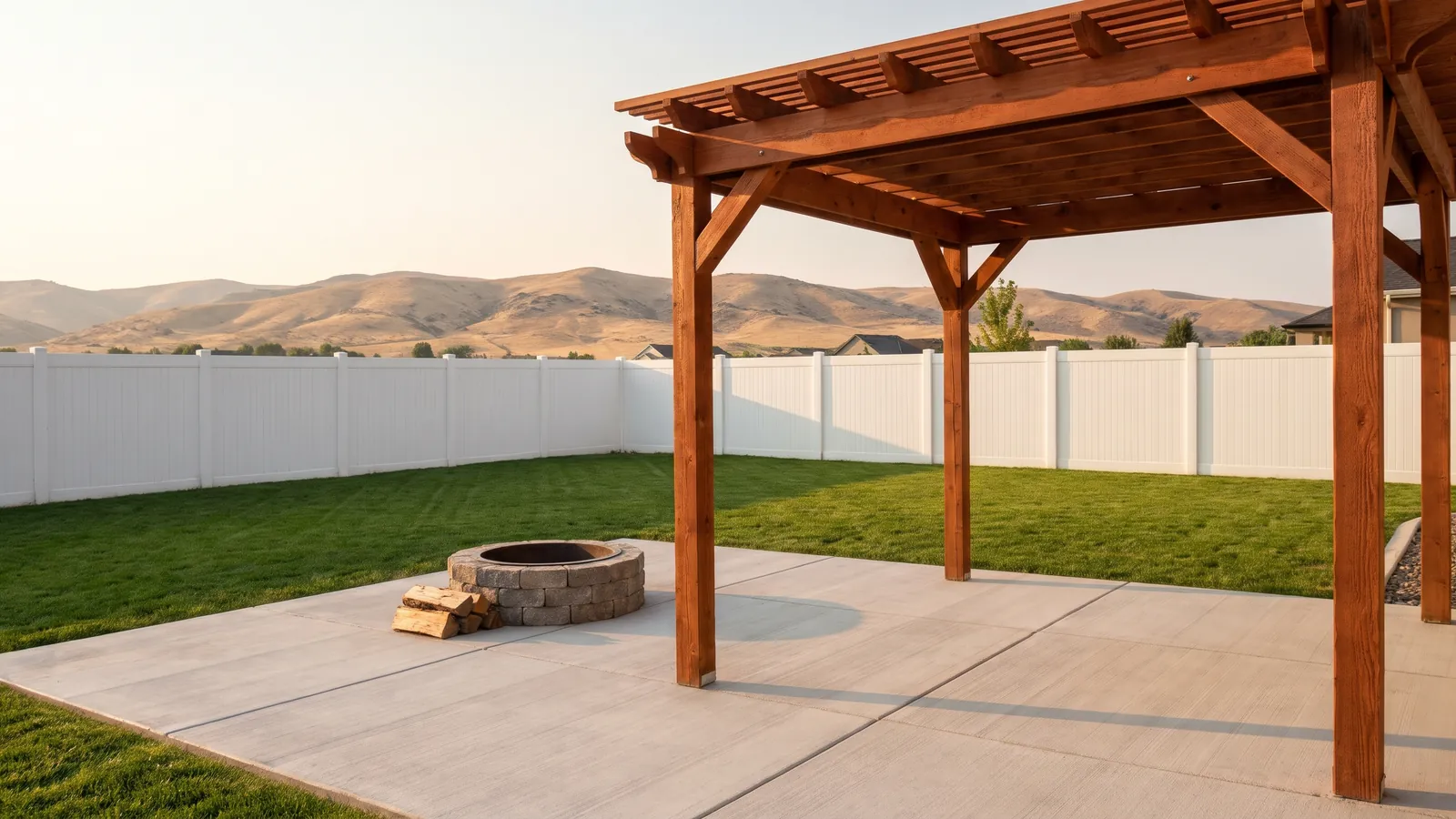
Most patio problems here are water problems, so layout starts with the irrigation. Almost every Meridian lot is on pressurized irrigation, and the line typically follows the rear lot line, which is exactly where most owners want the patio. Before excavation we locate the lines, valves and heads, relocate what is in the way, and set the slab's fall away from the house and outside the spray pattern. July rainfall at the Boise airport averages under a quarter inch, yet the sprinklers wet the slab edge every night all summer, and in winter that moisture freezes.
Against 108 freezing nights a year the specification is air-entrained concrete, a broom texture with traction when wet or icy, joints at a spacing that decides where cracks form, and a penetrating sealer. Finish choices range from plain broom with a smooth troweled border to stamped patterns, exposed aggregate and integral color.
Permits, covers and setbacks
The slab itself needs no City of Meridian building permit: the 2018 International Residential Code the City adopts does not require one for an at-grade patio. A cover is different. Meridian files it as an R-PATIO permit, and the City's handout states that every shade structure, attached or freestanding, requires one. Covers and pergolas bear on posts, and posts need footings sized for that structure, not for the slab. If a cover is planned, even two years from now, say so at the estimate; we place its footings at the City's 24-inch frost depth during the patio pour, so building the cover later does not involve cutting into the finished slab.
Placement is regulated as well. An open structure such as a covered patio may extend no more than two feet into a required setback, and rear easements are commonly ten feet, so we review the plat before laying out anything close to the fence.
What's included
Plat review
Rear and side easements and setbacks confirmed, so neither the patio nor a later cover lands in a restricted area.
Sprinkler work first
Lines, valves and heads located and relocated ahead of excavation; slab pitched out of the spray.
Cover-ready footings
When a pergola or cover is planned, 24-inch post footings are placed with the patio, ready for the R-PATIO application.
Mix and texture
About 6 percent entrained air, a broom texture for traction, and joints positioned to take the cracking.
Fall away from the foundation
A quarter inch per foot minimum, with no ponding outside the back door.
Sealer before the first freeze
Breathable penetrating sealer after cure, with care instructions in writing.
Patio prices in Meridian, ID
| Job | Typical price | Notes |
|---|---|---|
| 4-inch patio, broom texture | $8 – $13 per sq ft | A 16×20 runs about $2,600–$4,200 |
| Troweled border | + $1 – $2 per sq ft | Smooth band around a broom field |
| Stamped or colored concrete | $14 – $22 per sq ft | Details: stamped |
| Pergola or cover post footings | $150 – $350 each | 24 inches deep, placed with the patio |
| Break-out of an existing patio | $1.50 – $2.50 per sq ft | Concrete sent to recycling |
| Relocating sprinkler heads or a line | $150 – $700 | Set by what the excavation uncovers |
Budget figures for the Treasure Valley in 2026. The written estimate itemizes break-out, base, mix, slab thickness, steel, finish, joints, sealer and permits, and stays valid for 30 days.
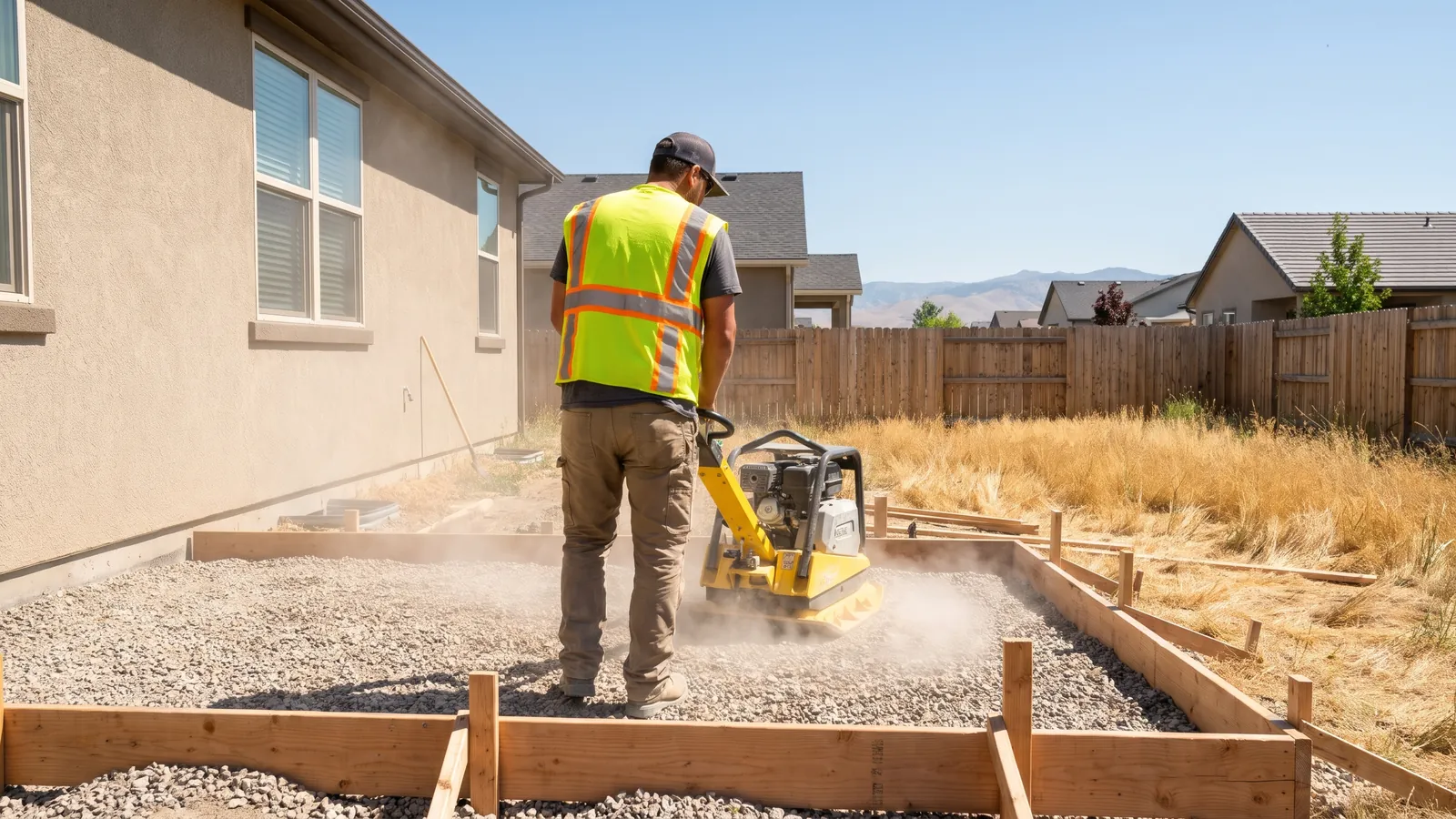
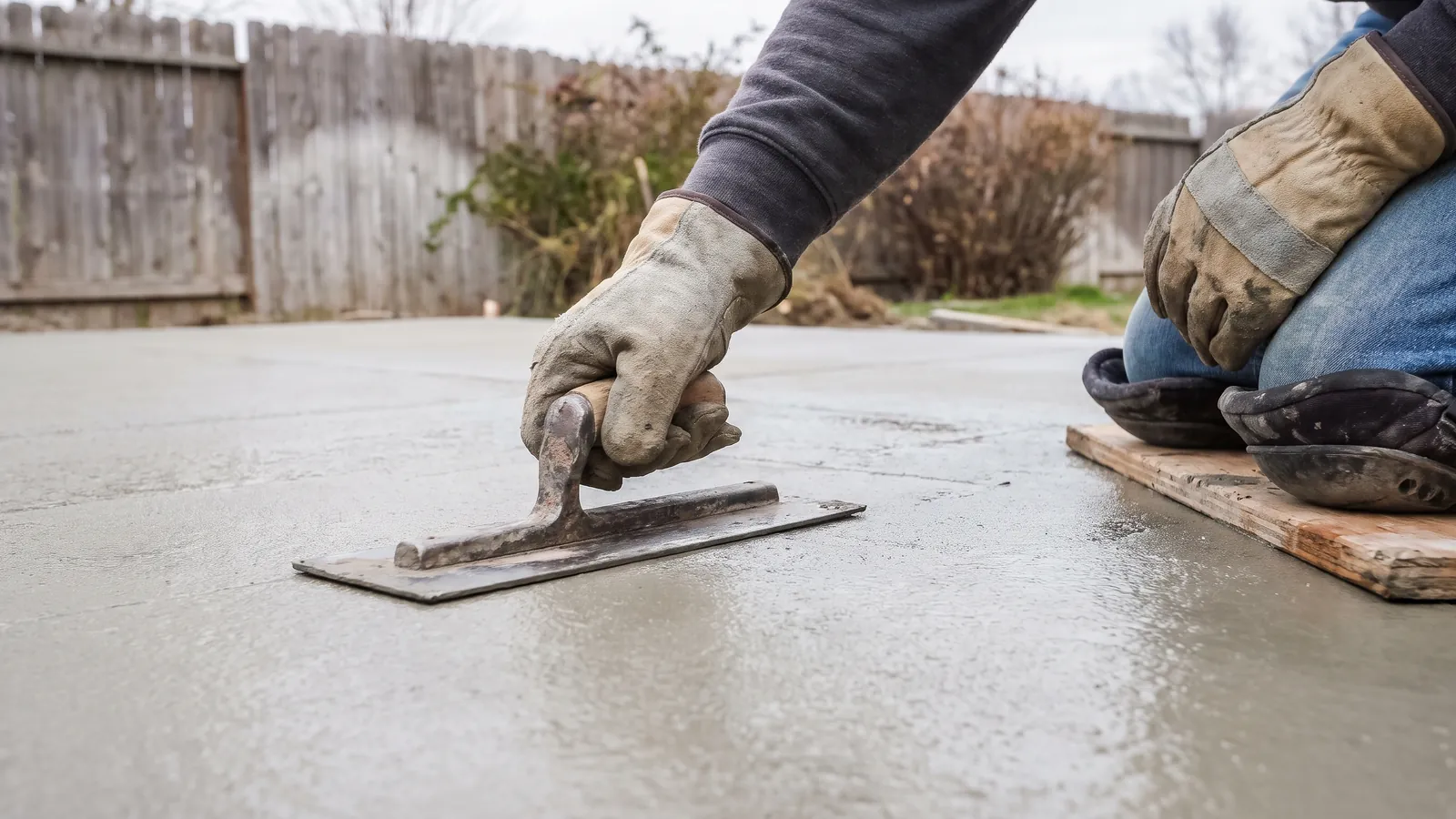
Recent work
Questions we get about concrete patios
Is a permit needed for a Meridian patio?
The at-grade slab needs none. A patio cover or pergola does (the City's R-PATIO permit), as does a retaining wall (R-MISC). When a cover is planned, its footings are placed during the patio pour.
What size patio should I plan?
Seating for six takes about 12 × 12 ft with room for chairs to slide back. With a grill and a walk-through, most patios land between 16 × 16 and 16 × 24 ft. We stake the outline on site before you decide.
Do sprinklers damage a patio?
Summer wetting does no harm to sound concrete. The risk is winter, when water held in the surface freezes. Redirecting the heads off the slab and sealing it reduce that risk considerably.
Broom texture or stamped?
Broom costs least and has the best traction; a smooth border improves the look. Stamped resembles stone, costs more and must be resealed every few years. With the correct mix and base, either lasts.
Can the patio meet the house foundation?
Yes. An isolation joint separates it from the house, the slab falls away from the wall, and the finished surface stays below the siding and the weep screed.